

knowledge resources
-
Why Sri Lanka Needs a New Financial Transactions Reporting Act, Not Just Amendments
Categories: Uncategorized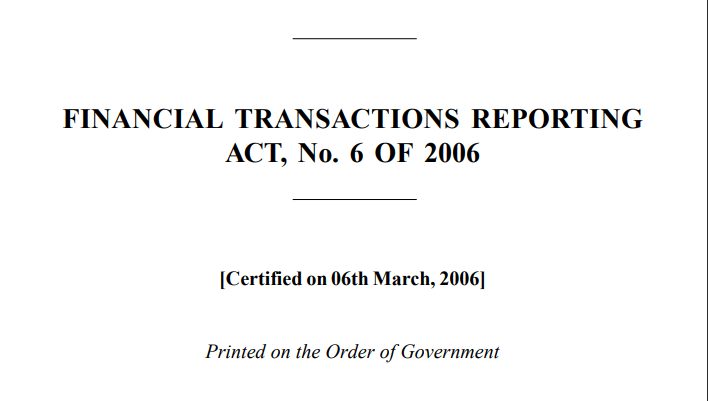
The Sri Lankan Financial Transactions Reporting Act (FTRA) of 2006 was a crucial step in combating money laundering and financing of terrorism (AML/CFT). But after nearly two decades, the financial landscape has changed dramatically, rendering the Act outdated and insufficient. While amending the existing law might seem like a logical option, introducing a new Act altogether offers several crucial advantages.
Complexity Overload: Since 2006, Sri Lanka has witnessed numerous developments in its financial and legal systems. All these advancements create a complex tapestry. Patching onto the existing FTRA with amendments would result in a convoluted, multi-layered law, posing challenges for interpretation and application. A new Act, on the other hand, can provide a comprehensive, streamlined framework, incorporating all relevant advancements and best practices from the past two decades.
Addressing Lapses: FTRA was drafted before the formal implementation of the Sri Lankan AML/CFT framework, leading to significant gaps and ambiguities. Critical components like:
- FIU Definition: The Act’s definition of the FIU lacks clarity on its structure, operational independence, and reporting requirements. A new Act can refine this definition, solidifying the FIU’s role and effectiveness in combating financial crime.
- Penalties and Appeals: The current Act’s provisions on penalties for non-compliance are vague. Additionally, the absence of an appeal mechanism against imposed penalties undermines due process. A new Act can establish clear and proportionate penalties, while also introducing a well-defined appeals process, ensuring fairness and accountability.
Harmonization with Sister Acts: Sri Lanka has proactively amended and updated the CTFA and PMLA to align with evolving standards and address emerging threats. FTRA, however, remains untouched, creating discrepancies and inconsistencies within the overall AML/CFT framework. A new Act would bring FTRA in line with its sister Acts, fostering synergy and coherence in tackling financial crime.
While amending the existing FTRA might seem like a simpler approach, the complexity it would create, coupled with the Act’s inherent shortcomings, outweighs any potential benefits. A new Act presents a golden opportunity to build a robust, future-proof legal framework that aligns with international best practices and effectively responds to Sri Lanka’s evolving financial landscape. This will not only strengthen Sri Lanka’s AML/CFT efforts but also enhance its financial integrity and reputation on the global stage.
Investing in a new FTRA is not just a legal update; it’s a strategic move towards a more transparent, secure, and prosperous Sri Lanka.
-

Sri Lanka, a beautiful island nation renowned for its beaches and vibrant culture, is also committed to keeping its financial system clean and its citizens safe. This is where Anti-Money Laundering (AML) and Countering the Financing of Terrorism (CFT) laws come in.
But what exactly are AML/CTF laws, and why are they important for Sri Lanka?
Imagine dirty money, earned through illegal activities like drug trafficking or terrorism, flowing through the financial system like a polluted river. AML/CTF laws act as filters, trying to trap these contaminants before they harm the economy and security of the country.
Sri Lanka’s AML/CTF framework rests on three main pillars:
- The Prevention of Money Laundering Act (No. 5 of 2006): This law criminalizes money laundering and defines “unlawful activities” that generate dirty money.
- The Convention on the Suppression of Terrorist Financing Act (No. 25 of 2005): This law tackles the financing of terrorism, making it illegal to provide funds or support to terrorist organizations.
- The Financial Transactions Reporting Act (No. 6 of 2006): This law requires certain businesses, like banks and real estate agents, to report suspicious transactions to the Financial Intelligence Unit (FIU).
These laws hold teeth:
- Financial institutions: Banks and other businesses must implement Know Your Customer (KYC) procedures to verify the identity of their clients and monitor their transactions.
- Reporting obligations: Suspicious transactions, exceeding certain thresholds, must be reported to the FIU, which investigates and takes necessary action.
- Penalties: Breaching AML/CFT laws can lead to hefty fines and even imprisonment.
So, how do these laws benefit Sri Lanka?
- A strong financial system: Dirty money can destabilize the economy and erode public trust in financial institutions. AML/CTF laws help keep the financial system clean and attract foreign investment.
- Reduced crime: By cracking down on money laundering and terrorist financing, Sri Lanka can combat organized crime and terrorism, making the country safer for everyone.
- International reputation: Complying with international AML/CFT standards is crucial for Sri Lanka’s standing in the global community.
Of course, no law is perfect:
- Challenges exist: Implementing and enforcing AML/CFT laws effectively requires resources and expertise. Sri Lanka is constantly working to improve its systems and address emerging threats.
- Balancing act: Striking the right balance between security and privacy is important. Businesses and individuals should understand their obligations under the law while maintaining access to essential financial services.
In conclusion, Sri Lanka’s AML/CTF laws are a vital line of defense against financial crime and terrorism. By understanding these laws and working together, we can help keep Sri Lanka a safe and prosperous haven for all.
For further information:
- Financial Intelligence Unit of Sri Lanka: http://fiusrilanka.gov.lk/
- Ministry of Justice – National Policy on AML/CFT: https://www.moj.gov.lk/images/pdf/2023/National_AML_CFT_Policy_2023-2028.pdf
-

In the emerald embrace of the Indian Ocean, where sun-kissed beaches whisper secrets to swaying palm trees, Sri Lanka’s beauty is undeniable. But beneath this postcard-perfect paradise lies a hidden battleground: the fight against financial crime. Enter the intricate labyrinth of Anti-Money Laundering (AML) and Counter-Terrorism Financing (CTF) regulations, where Sri Lanka is carving its own path with unique legal requirements.
Forget dusty legalese – Sri Lanka’s AML/CTF framework is a tapestry woven with diverse threads. The centerpiece is the “National Policy on Anti-Money Laundering and Countering the Financing of Terrorism (AML/CTF) of Sri Lanka.” This document, updated in 2023, acts as a strategic compass, identifying vulnerabilities and charting a course for robust compliance.
But the real intrigue lies in the implementation: a layered hierarchy of legal instruments that cascades from the lofty heights of policy down to the practical trenches of daily operations. Imagine a pyramid, each level holding a vital piece of the puzzle.
At the base, the Financial Transactions Reporting Act, Prevention of Money Laundering Act and Convention on the Suppression of Terrorism Fiannscing Act lay the firm foundation. They folrm the bedrock, outlining the fundamental obligations for designated businesses and professions, from jewelers to lawyers, accountants to real estate agents. These businesses are the gatekeepers, tasked with vigilant identification and reporting of suspicious activity.
Next, the “AML/CTF Rules” add another layer of complexity. Think of them as blueprints, dictating the specific procedures and controls each designated business must implement. Customer due diligence, transaction monitoring, and suspicious activity reporting – these are the weapons in the arsenal against financial crime.
But wait, there’s more! Each designated business must build its own bespoke defense system – the “AML/CTF Program.” This document, tailored to the organization’s specific risk profile, translates the broad strokes of the rules into actionable steps. It’s the battle plan, customized for a specific sector and its unique vulnerabilities. It provides the nitty-gritty details, the precise instructions for every frontline soldier in the fight against financial crime. From verifying customer identities to monitoring transactions, this manual ensures consistent implementation on the ground.
Sri Lanka’s AML/CTF framework is not just a static labyrinth; it’s a dynamic ecosystem, constantly evolving with new threats and changing landscapes. The “National Risk Assessment,” conducted periodically, acts as a reconnaissance mission, identifying emerging vulnerabilities and prompting adjustments to the framework.
This multi-layered, evolving approach is the key to Sri Lanka’s success in combating financial crime. It ensures comprehensive coverage, tailored implementation, and continuous adaptation – a testament to the island nation’s commitment to safeguarding its economic and security interests.
So, as you bask in the tropical splendor of Sri Lanka, remember that beneath the surface lies a complex, fascinating, and ultimately successful battle against financial crime. The story of Sri Lanka’s AML/CTF framework is not just about legal obligations; it’s about protecting a paradise, ensuring that its beauty remains untainted by the shadows of illicit activity.
