


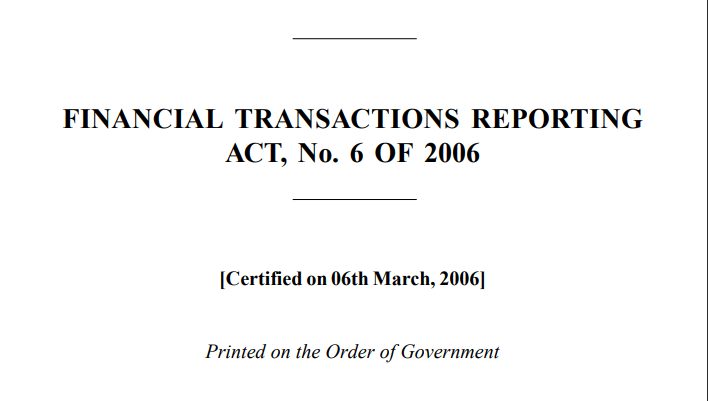
The Sri Lankan Financial Transactions Reporting Act (FTRA) of 2006 was a crucial step in combating money laundering and financing of terrorism (AML/CFT). But after nearly two decades, the financial landscape has changed dramatically, rendering the Act outdated and insufficient. While amending the existing law might seem like a logical option, introducing a new Act altogether offers several crucial advantages.
Complexity Overload: Since 2006, Sri Lanka has witnessed numerous developments in its financial and legal systems. All these advancements create a complex tapestry. Patching onto the existing FTRA with amendments would result in a convoluted, multi-layered law, posing challenges for interpretation and application. A new Act, on the other hand, can provide a comprehensive, streamlined framework, incorporating all relevant advancements and best practices from the past two decades.
Addressing Lapses: FTRA was drafted before the formal implementation of the Sri Lankan AML/CFT framework, leading to significant gaps and ambiguities. Critical components like:
- FIU Definition: The Act’s definition of the FIU lacks clarity on its structure, operational independence, and reporting requirements. A new Act can refine this definition, solidifying the FIU’s role and effectiveness in combating financial crime.
- Penalties and Appeals: The current Act’s provisions on penalties for non-compliance are vague. Additionally, the absence of an appeal mechanism against imposed penalties undermines due process. A new Act can establish clear and proportionate penalties, while also introducing a well-defined appeals process, ensuring fairness and accountability.
Harmonization with Sister Acts: Sri Lanka has proactively amended and updated the CTFA and PMLA to align with evolving standards and address emerging threats. FTRA, however, remains untouched, creating discrepancies and inconsistencies within the overall AML/CFT framework. A new Act would bring FTRA in line with its sister Acts, fostering synergy and coherence in tackling financial crime.
While amending the existing FTRA might seem like a simpler approach, the complexity it would create, coupled with the Act’s inherent shortcomings, outweighs any potential benefits. A new Act presents a golden opportunity to build a robust, future-proof legal framework that aligns with international best practices and effectively responds to Sri Lanka’s evolving financial landscape. This will not only strengthen Sri Lanka’s AML/CFT efforts but also enhance its financial integrity and reputation on the global stage.
Investing in a new FTRA is not just a legal update; it’s a strategic move towards a more transparent, secure, and prosperous Sri Lanka.


Leave a Reply